
2026 Season | Week 7
A Garden. A Wedding. A Wedding Garden
Hello Farm Friends,
In the interest of efficiency, we have delegated this week's newsletter to Artificial Intelligence. Why? Because Charlotte and Peter are busy getting married by the mayor of Delaware, Ohio, and apparently writing newsletters fell somewhere below "remember the rings" on the priority list. While AI may be writing these words, we can assure you that the vegetables are still grown the old-fashioned way—with sunshine, soil, hard work, and occasional panic about the weather. Here’s how they met - see if you can find them in each class photo - hint, they are usually only one person apart - so close-but it took another 60 years to finally connect.




Summer is beginning to find its rhythm here at Yankee Street Farm & Garden, and the fields are looking better every week.
This week we planted ginger and turmeric—two crops that require a long growing season but reward us with wonderful harvests later in the year. Our potatoes are growing vigorously, the tomatoes are putting on size, and in just a few weeks we'll be harvesting our garlic crop. The garlic has looked fantastic this season, and we're excited to begin curing it for future shares.
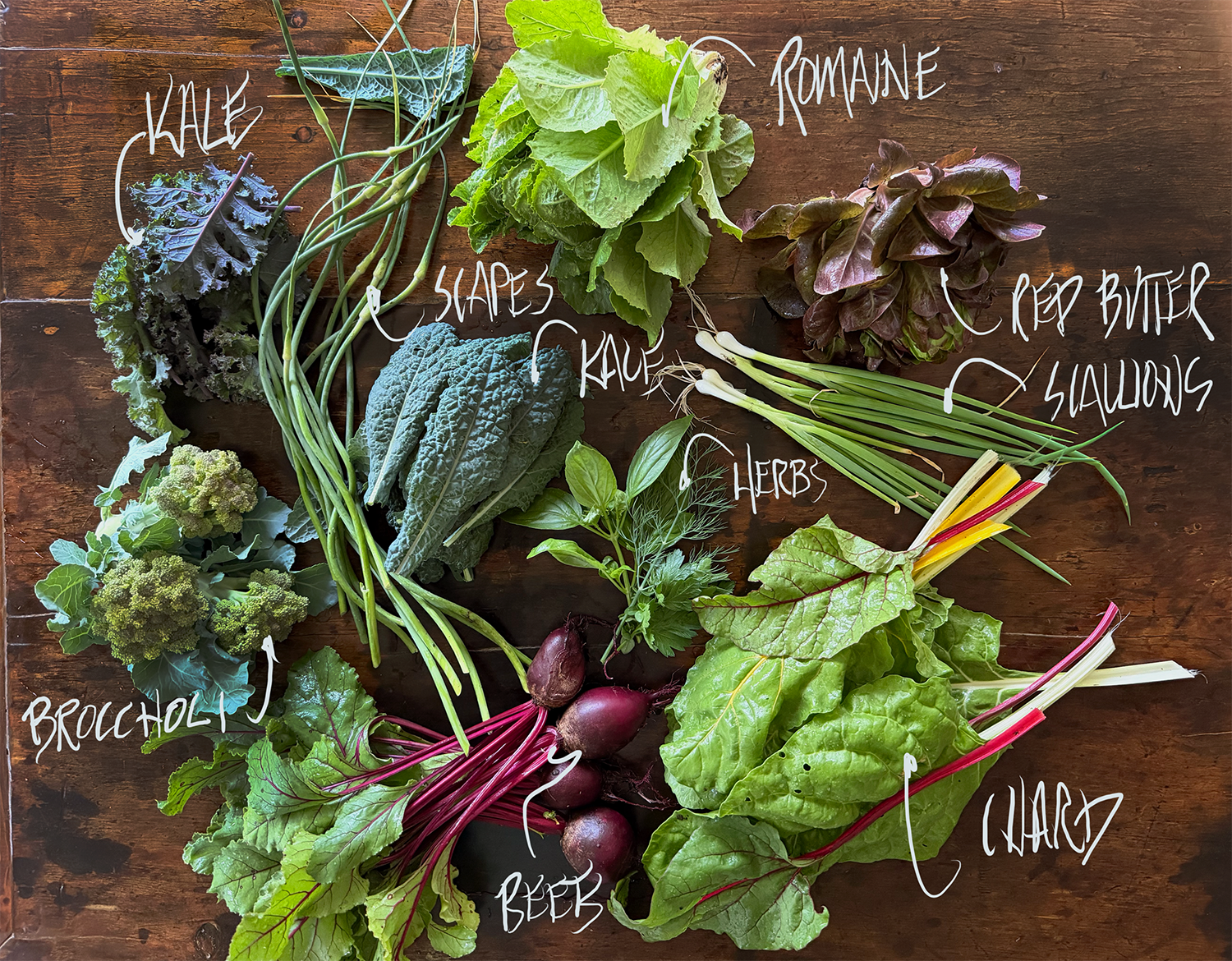
In this week's crate you'll find some smaller beets, scallions, and broccoli, along with our dependable favorites: red butter lettuce and romaine lettuce.
You'll also notice garlic scapes, one of the true seasonal treats of early summer. These curly flower stalks from hardneck garlic have a mild garlic flavor that works beautifully in a variety of dishes. If you're looking for inspiration, try this delicious recipe:
Charred Garlic Scapes with Parsley Butter:
https://itsavegworldafterall.com/charred-garlic-scapes-with-parsley-butter/
We're also excited to introduce our new fresh herb packages this week. Each bundle includes a mix of basil, rosemary, parsley, oregano, and thyme—perfect for adding fresh flavor to summer meals.
As always, thank you for supporting local agriculture and sharing in the harvest with us. We hope you enjoy this week's bounty!
Happy eating,
Peter, Charlotte, and the Yankee Street Farm & Garden Team


Charlotte celebrated a birthday this week and all she wanted was a summer haircut for Wilbur and a sign for her new flower and herb garden. Check. Check.
-
Item description
-
BROCCOLI 101 - You can eat all parts of the broccoli plant - leaves, stems and florets. You can cook it in a variety of ways– roasted all by itself, in a casserole or thrown into a stir fry. Broccoli leaves can be prepared the same ways as kale, Swiss chard or collard and mustard greens. Delicious in salads, soups, sandwiches, or even blended into a smoothie. The leaves are highest in cell-protecting antioxidants, vitamins E and K, and calcium. Who knew?
EAT NOW - First, strip off any leaves - they can be prepared like kale or collards. Break the head into florets. Cut the stock into smaller pieces - they’ll need extra cooking time.
OR LATER - Wrap loosely in a plastic bag and keep it in the crisper drawer in your refrigerator. it will keep for a week, but like most veggies, there’re best when enjoyed as soon as possible so eat them NOW.
RECIPES
-
SCAPES 101 Raw garlic scapes are crunchy like green beans or asparagus, when cooked garlic scapes tend to take on a more muted and sweeter flavor similar to roasted garlic. Sauté your scapes with other fresh veggies to infuse everything with a subtle garlic flavor. Or, toss with oil, salt, and pepper and sauté or grill them - they’re great on their own or as a side. You can even cut them long to be used as a substitute for the green beans in a spicy stir-fry.
EAT NOW To prep, trim and discard the stringy tip of the scape and the bottom, woodier part of the stem. Cut crosswise, either minced or in large sections, depending on how you will use it.
OR LATER Store in a plastic bag in the fridge for 2-3 weeks or for a few days on the counter in a glass with cool water - bonus, it’s beautiful! Scapes can also be blanched, then stored in a plastic bag in the freezer for up to 1 mo.
RECIPES
yankeestreetfarm.com/blog/the-great-garlic-scape
-
HERB PACK 101 - Rinse herbs gently in cool water and pat dry. Remove any tough stems from rosemary and thyme, then chop herbs as needed. Basil, parsley, dill, rosemary, and thyme each bring their own unique flavor and can be used individually or blended together in countless dishes.
EAT NOW - Store herbs unwashed in the refrigerator. Wrap loosely in a damp paper towel and place in a sealed bag or container. Basil prefers room temperature and should be kept on the counter like a bouquet of flowers. Most herbs are best used within a week for maximum freshness and flavor.
OR LATER - Fresh herbs can be used raw or cooked. Parsley, basil, and dill add bright flavor to salads, dressings, dips, and sauces, while rosemary and thyme shine in roasted vegetables, meats, soups, and stews. Herbs are packed with antioxidants and beneficial plant compounds that support overall health. This herb blend can be used interchangeably with: oregano, sage, cilantro, marjoram, tarragon, chives, and mint.
-
KALE 101 - Wash leaves in lukewarm water. If your greens have thick stems, remove them by folding each leaf in half and slicing out the stem. Then, stack the leaves up and slice diagonally into 1” wide strips.
EAT NOW - Wrap unwashed chard or kale in a sealed plastic bag in the crisper drawer of the fridge. Best used very fresh, but may last for a week. To freeze, blanch washed greens, rinse in cold ice water, drain, and pack into airtight containers.
OR LATER - Swiss chard or kale can both be eaten raw or cooked. A longer cooking time is best as it brings out the sweetness in the greens. Extremely high in vitamin K and vitamin A, these nutrient-dense greens can help combat cancer and reduce blood pressure! Chard and kale can be used interchangeably with: collards, turnip greens, beet greens, broccoli raab, mustard greens, dandelion, and spinach.
-
RED BUTTER LETTUCE 101 - Red Butter Lettuce is known for its soft, tender leaves, mild buttery flavor, and beautiful reddish-purple edges. This delicate lettuce is packed with nutrients including Vitamins A and K, folate, and antioxidants. Its velvety texture makes it perfect for fresh salads, sandwiches, wraps, or as a colorful garnish for almost any meal. Pair it with bright vegetables, fruit, nuts, or creamy cheeses for an easy and elegant salad.
EAT NOW - Gently separate the leaves from the base and discard any wilted or damaged outer leaves. Rinse carefully in cold water and pat dry or use a salad spinner. Tear into bite-size pieces and enjoy fresh.
OR LATER - Store unwashed lettuce in a plastic bag or container in the refrigerator crisper drawer. If washed, dry thoroughly and store with a paper towel to absorb excess moisture and keep leaves crisp longer.
-
ROMAINE 101 - Romaine lettuce belongs to the lettuce family, Asteraceae, and it is characterized by its elongated, sturdy leaves and crisp texture. It is a nutritious vegetable, rich in vitamins and minerals. Romaine lettuce is an excellent source of Vitamin A, Vitamin K, folate, and fiber.. If you’re looking for low carb options, try using the large leaves as a wrap with your favorite fillings. Or, whip together a crisp and delicious salad by mixing with other greens and your favorite fruits, nuts, or cheeses!
EAT NOW - Slice the head of your lettuce at the base with a knife and let the leaves fall open. Remove any damaged or leathery leaves, then tear remaining into bitesize pieces. Wash in a basin of cold water and spin dry.
OR LATER - Store unwashed lettuce in a plastic bag in the refrigerator. If you’ve already washed and dried it, place in a plastic bag with a dry paper towel in the bag as well and place in the vegetable crisper of your refrigerator.
RECIPES
-
SCALLIONS 101 - Did you know scallions, spring onions and green onions are all the same plant? Scallions are picked early, before a bulb forms, while spring onion and green onion are picked when more mature. Spring onions are sweeter and mellower than regular onions, but the greens are more intense in flavor than scallions. The bulbs can be red or white, depending on the variety, and while they can be used in much the same way as regular bulb onions, they are great grilled, roasted whole, or used like pearl onions. Scallions and spring onions are great raw in a marinade or salad dressing, or lightly cooked. You can even add it to your “freezer scrap bag” for a great veggie stock.
EAT NOW - Rinse onions in cold water and snip off the roots and anything that’s floppy or dried out. The minced greens are less pungent than the bulb and make a good substitute for chives. Use spring onion in almost any recipe calling for onions, raw or cooked, for a more subtle, less intense onion flavor. They are excellent in soups and stews. Try brushing onions with sesame oil, salt, and pepper and put them on the grill. You can also use any part of the onion for your freezer bag of vegetable stock ingredients!
OR LATER - Cut the top quarter off and stand (with root) in 1” of water. Cover loosely with ziplock and place in the fridge or keep on counter, refresh the water every three days. To freeze, chop and put in a freezer bag.
-
SWISS CHARD 101 - A member of the Beet family, Swiss chard can be eaten raw or cooked. A longer cooking time is best as it brings out the sweetness in the green. Extremely high in vitamin K and vitamin A, this nutrient-dense green can help combat cancer and reduce blood pressure! Chard can be used interchangeably with: collards, turnip greens, beet greens, broccoli raab, mustard greens, dandelion, spinach and kale.
EAT NOW - Wash leaves in lukewarm water. If your greens have thick stems, remove them by folding each leaf in half and slicing out the stem. Then, stack the leaves up and slice diagonally into 1” wide strips.
OR LATER - Wrap unwashed chard in a sealed plastic bag in the crisper drawer of the fridge. Best used very fresh, but may last for a week. To freeze, blanch washed greens, rinse in cold ice water, drain, and pack into airtight containers.
RECIPES