
2026 Season | Week 11
Switching Garden Gears
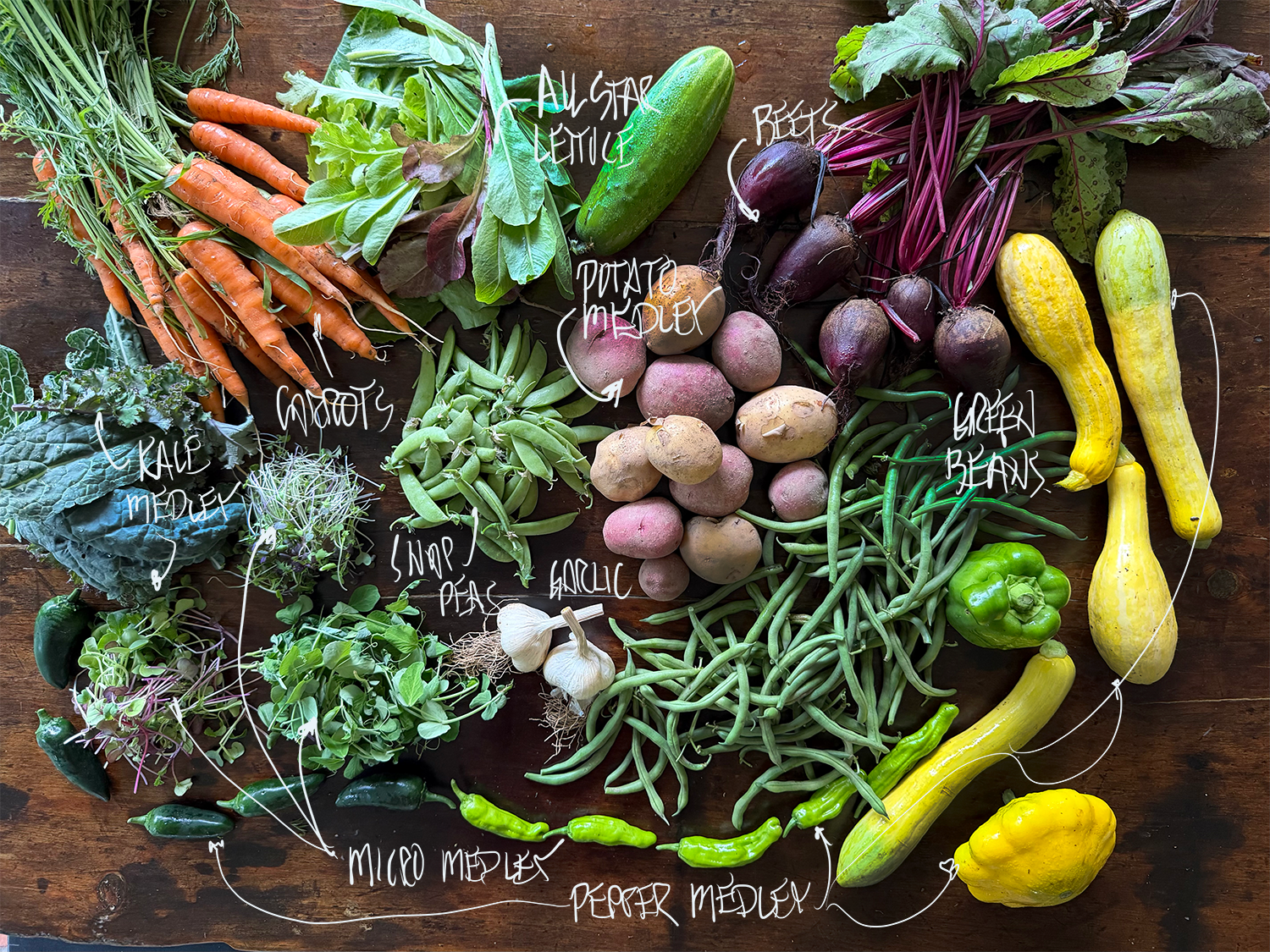
We’re entering a new phase in the gardening season. Some crops - like carrots, beets, arugula, swiss chard and kale—are wrapping up their season, while others—like peppers and tomatoes are just getting going. Still others like potatoes and garlic are being harvested now for weekly enjoyment in the weeks to come.
Also, this week, we’re are trying a microgreen taste test - three varieties at once for the first time. Heck, two years ago, I didn’t know there were different kinds. (And just an FYI, there are hundreds of kinds, some are scrolling past below) Anyway, let us know what you’re doing with them and which ones you like the best. Pea shoots are the newest variety - learn what to do with them HERE.
Amaranth Arugula (Rocket) Asian Mix Basil (Genovese) Basil (Lemon) Basil (Purple) Beet Bok Choy Borage Broccoli Buckwheat Cabbage (Green) Cabbage (Red) Carrot Cauliflower Celery Chard (Rainbow) Chervil Chicory Chinese Cabbage (Napa) Cilantro (Coriander) Clover Collards Corn Shoots Cress (Garden) Cress (Pepper) Cress (Upland) Daikon Radish Dandelion Dill Endive Fennel Fenugreek Garlic Chives Kale (Curly) Kale (Lacinato/Dinosaur) Kohlrabi (Green) Kohlrabi (Purple) Komatsuna Leek Lemon Balm Lettuce (Green Leaf) Lettuce (Red Leaf) Lettuce (Romaine) Lovage Mache (Corn Salad) Marigold Mizuna Mustard (Brown) Mustard (Green Wave) Mustard (Red Giant) Mustard (Southern Giant Curled) Nasturtium Onion Orach Pak Choi Parsley (Curly) Parsley (Italian Flat Leaf) Pea Shoots Perilla (Shiso) Popcorn Shoots Purslane Quinoa Radish (China Rose) Radish (Purple Sango) Radish (Rambo) Radish (Red Rambo) Radish (Red) Radish (White Icicle) Rocket (Arugula) Sorrel Spinach Sunflower Swiss Chard Tatsoi Turnip Wasabi Mustard Watercress Wheatgrass
〰️
Amaranth Arugula (Rocket) Asian Mix Basil (Genovese) Basil (Lemon) Basil (Purple) Beet Bok Choy Borage Broccoli Buckwheat Cabbage (Green) Cabbage (Red) Carrot Cauliflower Celery Chard (Rainbow) Chervil Chicory Chinese Cabbage (Napa) Cilantro (Coriander) Clover Collards Corn Shoots Cress (Garden) Cress (Pepper) Cress (Upland) Daikon Radish Dandelion Dill Endive Fennel Fenugreek Garlic Chives Kale (Curly) Kale (Lacinato/Dinosaur) Kohlrabi (Green) Kohlrabi (Purple) Komatsuna Leek Lemon Balm Lettuce (Green Leaf) Lettuce (Red Leaf) Lettuce (Romaine) Lovage Mache (Corn Salad) Marigold Mizuna Mustard (Brown) Mustard (Green Wave) Mustard (Red Giant) Mustard (Southern Giant Curled) Nasturtium Onion Orach Pak Choi Parsley (Curly) Parsley (Italian Flat Leaf) Pea Shoots Perilla (Shiso) Popcorn Shoots Purslane Quinoa Radish (China Rose) Radish (Purple Sango) Radish (Rambo) Radish (Red Rambo) Radish (Red) Radish (White Icicle) Rocket (Arugula) Sorrel Spinach Sunflower Swiss Chard Tatsoi Turnip Wasabi Mustard Watercress Wheatgrass 〰️
-
BEETS 101—Beets are healthy, versatile, taste amazing, and look beautiful. One of the best things about them is that they keep well before and after cooking, and every part is edible and delicious. Beets can be broiled, steamed, grilled, or roasted, our favorite. (We like cut beets roasted in olive oil and salt and pepper the best!)
EAT NOW—Roots: Just before cooking, scrub the beets well and remove any scraggly leaves and rootlets. If your recipe calls for raw beets, peel them with a knife or a veggie peeler, then grate or cut them according to the recipe. To remove the skins, roast them in foil or boil them, and the peels will slip right off.
Beet greens: Wash the leaves in a basin of lukewarm water to remove grit. Remove the thicker stems. Depending on use, cut the greens into appropriately sized pieces.
OR LATER - To Freeze: Beet Roots: Boil or bake beets until done. Cool them in ice water or let them come to room temperature. Remove peels. Trim the beets into 1/4-inch slices or keep them whole (if they are small). Place in a freezer bag and remove as much air as possible. Seal and freeze. Beet greens: Blanch wash beet greens for 2-3 minutes in hot boiling water. Immediately dunk in ice water to stop the cooking process. Then drain and pack into airtight containers. Freeze them in “balls” on a cookie sheet, then pop them into a freezer bag for the perfect portion.
DON’T TOSS THOSE BEET GREENS! - Beet greens are delicious! Here are some simple ways to use them: Use them for making vegetable stock, toss them into a salad — especially the smaller leaves, braised with a bit of olive oil, garlic, and pepper flakes, toss in a smoothie, add them to an omelet, frittata, or quiche, stir them into a pasta sauce in the final stages, add to a soup, like you would kale or spinach, turn them into a pesto
RECIPES
-
CARROTS 101 - Crunchy, tasty, and highly nutritious, carrots are one of our favorite root vegetables. Carrots are a great source of beta carotene, fiber, vitamin K1, potassium, and antioxidants! We’re used to seeing orange carrots, but did you know carrots come in a variety of colors like yellow, white, red, and even purple? Both the root and the greens are edible - the leaves make for a great garnish or addition to pesto. The greens have a slightly bitter taste that compliments the sweetness of the root.
EAT NOW - Because we don’t use pesticides, our carrots don’t need to be peeled. Simply rinse and scrub any dirt before use. Eaten raw, carrots are great whole, julienned, speared, or chopped. Carrots can be boiled, sautéd, stir fried, or even air fried! Fresh carrot tops can be chopped into a green salad or stir-fry too! The greens can also be dried and used as an herb like parsley.
OR LATER - To avoid “floppy carrots,” remove the green tops as soon as you can, leaving about an inch of stems. Save the greens separately. Then, place root in a bag in the fridge or in a bin of water (like celery) to keep them crisp, changing out the water every few days. Uncut carrots will last in the fridge for up to 4 weeks. They can also be chopped, then blanched and placed in an airtight container in the freezer to keep longer. Store the tops in a separate bag in the fridge. Or put them in a plastic Ziplock in your freezer and use them to make DIY vegetable or chicken stock.
To blanch, bring a pot of lightly salted water to a rolling boil. While you wait for boil, prepare an ice bath. Once boiling, drop veggies into water - water should return to boil within a minute otherwise you have too much veg for the water. Once boil has returned, cook for 1-5 min until veg has a vibrant color. Immediately put into ice bath to stop cooking.
RECIPIES
-
Cucumber 101
Crisp, cool, and incredibly refreshing, cucumbers are a staple summer vegetable (technically a fruit!) known for their high water content and mild flavor. They belong to the gourd family and are rich in hydration, vitamin K, and antioxidants. Whether you choose slicing cucumbers or smaller pickling varieties, they add crunch and freshness to almost any dish.Eat Now
Enjoy cucumbers raw—just wash, slice, and snack. Add to salads, sandwiches, or enjoy with a sprinkle of sea salt or a splash of vinegar. For a cooling treat, slice into water with lemon and mint for a spa-style drink.Eat Later
Store whole cucumbers in the fridge, preferably in the crisper drawer, for up to a week. Once cut, wrap tightly in plastic or place in an airtight container to maintain moisture and crunch. Avoid storing near ethylene-producing fruits like bananas, which can cause premature spoilage.Recipes
Cucumber Salad: Toss sliced cucumbers with red onion, rice vinegar, sesame oil, and a pinch of sugar for a quick Asian-inspired salad.
Tzatziki Sauce: Grate cucumber and mix with Greek yogurt, garlic, lemon, and dill for a tangy, creamy dip.
Chilled Cucumber Soup: Blend cucumbers with yogurt, mint, and a splash of lemon juice for a refreshing summer soup.
-
Fresh Garlic
Fresh Garlic 101
Fresh-harvested garlic, also known as “wet” or “green” garlic, is garlic that’s been pulled from the ground before it’s fully cured. Unlike the dry, papery bulbs you find in the store, fresh garlic has moist skins, juicy cloves, and sometimes green stalks still attached. The flavor is milder and more delicate than cured garlic, with a slightly grassy, almost sweet note—perfect for early summer cooking.Eat Now
Use fresh garlic anywhere you’d use regular garlic, but celebrate its tenderness! Slice or mince the cloves for sautés, salad dressings, or marinades. The juicy cloves melt beautifully into sauces, and the mild flavor makes it a lovely addition raw in dips or spreads. If the stalks are still soft, you can treat them like scallions—chop and toss into stir-fries, soups, or omelets.Eat Later
If you’re not using it right away, store fresh garlic in a cool, dry spot with good airflow. It won’t last as long as cured garlic—typically a few weeks—so keep an eye on it. To preserve the harvest, you can cure the garlic yourself by allowing it to dry for a few weeks, or peel and freeze the cloves for longer storage. Roasting and storing in oil (with proper safety precautions) is another delicious way to enjoy fresh garlic down the road.
-
GREEN BEANS 101 - Turning a vibrant, beautiful green when cooked, string beans are versatile and delicious. Easy to prepare, string beans are great sautéed, roasted, grilled, or in stir-fry – we even like snacking on them while we cook! We believe simple is almost always better and like them best with a little of our 1808 Olive Oil, salt, and pepper. If you’re feeling spicy, try adding red pepper flakes.
EAT NOW - Rinse beans in cool water and pat dry. Snap off stem and any damaged parts before use. Can be eaten raw or cooked in a variety of delicious ways!
OR LATER - Store unwashed beans in a perforated plastic bag in the veggie bin of your fridge for up to 1 week. Rejuvenate limp beans by soaking them in ice water for 30 min. To freeze, blanch, dry well, and pack into airtight containers.
To blanch, bring a pot of lightly salted water to a rolling boil. While you wait for boil, prepare an ice bath. Once boiling, drop veggies into water - water should return to boil within a minute otherwise you have too much veg for the water. Once boil has returned, cook for 1-5 min until veg has a vibrant color. Immediately put into ice bath to stop cooking.
RECIPIES
-
KALE 101 - Wash leaves in lukewarm water. If your greens have thick stems, remove them by folding each leaf in half and slicing out the stem. Then, stack the leaves up and slice diagonally into 1” wide strips.
EAT NOW - Wrap unwashed chard or kale in a sealed plastic bag in the crisper drawer of the fridge. Best used very fresh, but may last for a week. To freeze, blanch washed greens, rinse in cold ice water, drain, and pack into airtight containers.
OR LATER - Swiss chard or kale can both be eaten raw or cooked. A longer cooking time is best as it brings out the sweetness in the greens. Extremely high in vitamin K and vitamin A, these nutrient-dense greens can help combat cancer and reduce blood pressure! Chard and kale can be used interchangeably with: collards, turnip greens, beet greens, broccoli raab, mustard greens, dandelion, and spinach.
-
NEW POTATOES 101 – Tender, creamy, and naturally buttery, new potatoes are young potatoes harvested before they reach full maturity. Their thin, delicate skins don't need peeling, and their moist texture makes them perfect for simple preparations that let their fresh flavor shine. New potatoes are a good source of vitamin C, potassium, vitamin B6, and fiber (especially when eaten with the skin on). Available in white, red, yellow, and even purple varieties, they're one of the joys of the early summer harvest.
EAT NOW – Because we grow without synthetic pesticides, there's no need to peel them. Simply rinse and gently scrub away any soil. New potatoes are delicious boiled, steamed, roasted, grilled, or air-fried. Toss them with butter and fresh herbs, fold them into potato salad, or roast until golden and crispy on the outside while staying creamy inside.
OR LATER – Store unwashed new potatoes in a cool, dark, well-ventilated place—not in the refrigerator, as cold temperatures can affect their flavor and texture. Since they're freshly harvested and have thin skins, they're best enjoyed within 1–2 weeks. Avoid storing them in plastic bags or near onions, which can shorten their shelf life.
RECIPES
Herb Butter New Potatoes
Classic Creamy Potato Salad
Crispy Roasted Garlic Potatoes
Grilled New Potatoes with Rosemary
-
Microgreens 101—Before use, rinse gently in cool (not hot or cold) water to remove excess dirt. Pat or spin dry, and you’re good to go! Pat or spin dry your greens to remove excess moisture (moisture = mush!). Place loosely in a plastic bag or container and put in the fridge. They will keep for up to one week.
Eat These Immediately!
-
PEPPERS 101 - Whether hot or sweet, peppers are full of beneficial vitamins and minerals and are great raw or cooked. They can be sliced on pizzas or as part of salads and even stuffed with meats and cheeses. Hotter peppers like jalapeños can be cooked or roasted to reduce their heat. They make a great addition to any meal such as: sandwiches, tacos, pizzas, or chopped and added to soups, stews, sauces and more. Our personal favorite, are Jalapeño Poppers.
EAT NOW - First rinse and dry your peppers. Cut off the top and slice. If preparing hot peppers, be careful to wash your hands after handling - don’t touch your eyes! For less spicy peppers, cut in half length-wise and remove seeds and ribs. Are best stored whole.
OR LATER - Store whole or sliced in fridge for up to 1 week. To store longer, flash freeze (whole or sliced) on a cookie sheet. Transfer to a freezer bag once frozen. They keep well in the freezer – no need to thaw for use in cooked dishes.
RECIPES
-
Salad Mix 101
All-Star Salad Mix is a flavorful blend of tender baby greens—usually including spinach, arugula, chard, and red and green lettuces. It’s pre-washed and ready to eat, making it a super convenient way to get fresh greens into your meals. Mild, slightly peppery, and packed with nutrients, it's perfect for both quick salads and creative dishes.
How to Enjoy Right Now
Toss it with a simple vinaigrette and a pinch of salt for an easy, vibrant side. Add sliced fruit, goat cheese, and nuts for a fancier version. It also makes a great base for grain bowls, sandwiches, or even stirred into warm pasta just before serving—the heat will wilt the greens slightly and bring out their flavor.Enjoy it now
Keep the mix in its original container or transfer it to a sealed container lined with a paper towel to absorb moisture.
or Later
Store in the fridge and use within a few days for best texture and taste. If it starts to wilt, don’t toss it—cook it! Lightly sauté in olive oil with garlic for a quick side dish or stir it into scrambled eggs, soups, or stews.
-
SNAP PEAS 101 – Sweet, crisp, and delicious right off the vine, snap peas are one of the first true tastes of summer. Unlike shelling peas, the entire pod is edible, making them a convenient and nutritious snack. Snap peas are rich in vitamins C and K, fiber, folate, and antioxidants. Their satisfying crunch and natural sweetness make them just as good raw as they are lightly cooked.
EAT NOW – Rinse before eating and remove the small stem if desired. Enjoy them fresh as a snack, tossed into salads, or served with hummus or your favorite dip. Snap peas are also excellent lightly sautéed, stir-fried, roasted, or quickly steamed—just cook until they're bright green and still crisp.
OR LATER – Store unwashed snap peas in a breathable or loosely sealed bag in the refrigerator. They stay at their sweetest and crunchiest for about 5–7 days. For longer storage, blanch them for 1–2 minutes, cool immediately in an ice bath, drain well, and freeze in an airtight container for up to 8 months.
To blanch, bring a pot of lightly salted water to a rolling boil. While waiting, prepare an ice bath. Add the snap peas to the boiling water for 1–2 minutes, until they turn bright green. Immediately transfer them to the ice bath to stop the cooking. Drain thoroughly before freezing.
RECIPES
Sesame Ginger Snap Pea Stir-Fry
Snap Pea & Radish Salad with Lemon Vinaigrette
Garlic Butter Sautéed Snap Peas
Chilled Snap Peas with Herbed Yogurt Dip
-
SQUASH 101 - Because of their bland flavor, summer squash lend themselves to many cooking applications, taking on the flavor of whatever they’re cooked with. Try using them as a substitute for rice, pasta or potatoes. Or, slice tender, young squash into salads, stir-fries, or with pasta. The are also great on the grill!
EAT NOW - Gently scrub away dirt. Slice off the tops. Can be roughly chopped, sliced, or grated for a variety of recipes from steamed to stuffed to stir-fried!
OR LATER - Store squash unwashed in a perforated plastic bag in the vegetable bin for about a week and a half. Freeze pureed (seeded) zucchini in Ziplock bags, and grated zucchini for use in breads and muffins.
RECIPE