
2025 Season | Week 24
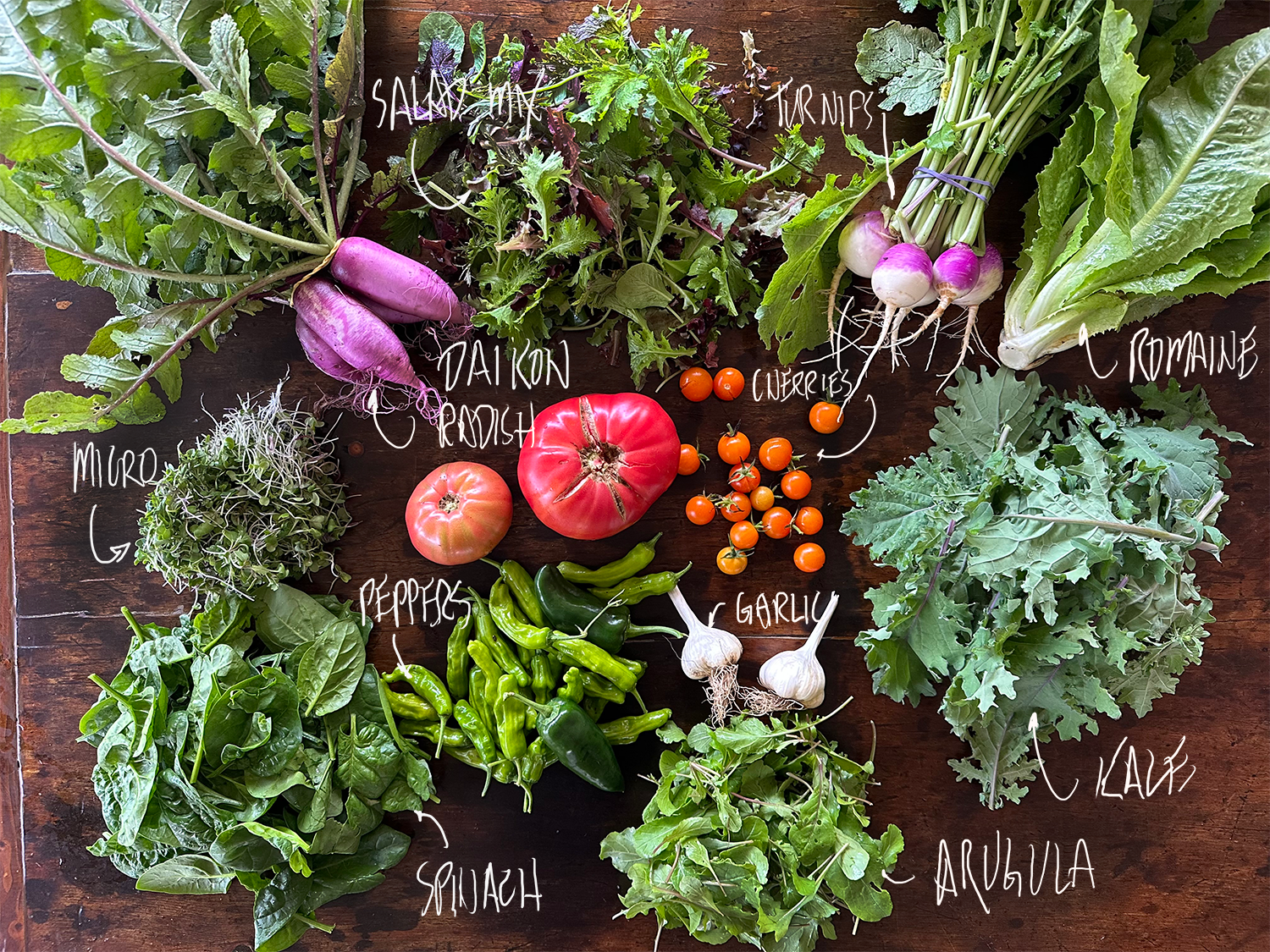
Going out with a Bang!
Well, folks, it's our last official harvest of the season. Bittersweet for sure. But we've got the makings of some great meals this week.
But that's not all…
Look for an extra harvest of squash and more just in time for Thanksgiving.
From all of us - Matt, Elandra, Shelly, Will, Charlotte and, of course, Peter, thanks for letting us grow for you this season. We hope you enjoyed it as much as we did. We'll be gathering your feedback in the coming weeks.
-
Arugula 101
Arugula is a fast-growing leafy green with a peppery, slightly nutty bite. Baby leaves are milder and tender; mature leaves are more assertive and better suited to cooking.Enjoy Now
Toss fresh into salads or on pizza after baking, fold into warm pasta with lemon and parmesan, layer on sandwiches, or blitz into pesto with walnuts, garlic, and olive oil.Save for Later
Keep wrapped in a dry towel inside a vented container in the fridge to extend life; make and freeze arugula pesto; or lightly wilt then freeze in small portions for omelets, grains, and soups. -
Fresh Garlic 101
Fresh-harvested garlic, also known as “wet” or “green” garlic, is garlic that’s been pulled from the ground before it’s fully cured. Unlike the dry, papery bulbs you find in the store, fresh garlic has moist skins, juicy cloves, and sometimes green stalks still attached. The flavor is milder and more delicate than cured garlic, with a slightly grassy, almost sweet note—perfect for early summer cooking.Eat Now
Use fresh garlic anywhere you’d use regular garlic, but celebrate its tenderness! Slice or mince the cloves for sautés, salad dressings, or marinades. The juicy cloves melt beautifully into sauces, and the mild flavor makes it a lovely addition raw in dips or spreads. If the stalks are still soft, you can treat them like scallions—chop and toss into stir-fries, soups, or omelets.Eat Later
If you’re not using it right away, store fresh garlic in a cool, dry spot with good airflow. It won’t last as long as cured garlic—typically a few weeks—so keep an eye on it. To preserve the harvest, you can cure the garlic yourself by allowing it to dry for a few weeks, or peel and freeze the cloves for longer storage. Roasting and storing in oil (with proper safety precautions) is another delicious way to enjoy fresh garlic down the road. -
KALE 101 - Wash leaves in lukewarm water. If your greens have thick stems, remove them by folding each leaf in half and slicing out the stem. Then, stack the leaves up and slice diagonally into 1” wide strips.
EAT NOW - Wrap unwashed chard or kale in a sealed plastic bag in the crisper drawer of the fridge. Best used very fresh, but may last for a week. To freeze, blanch washed greens, rinse in cold ice water, drain, and pack into airtight containers.
OR LATER - Swiss chard or kale can both be eaten raw or cooked. A longer cooking time is best as it brings out the sweetness in the greens. Extremely high in vitamin K and vitamin A, these nutrient-dense greens can help combat cancer and reduce blood pressure! Chard and kale can be used interchangeably with: collards, turnip greens, beet greens, broccoli raab, mustard greens, dandelion, and spinach.
-
Microgreens 101—Before use, rinse gently in cool (not hot or cold) water to remove excess dirt. Pat or spin dry, and you’re good to go! Pat or spin dry your greens to remove excess moisture (moisture = mush!). Place loosely in a plastic bag or container and put in the fridge. They will keep for up to one week.
Eat These Immediately!
-
PEPPERS 101 - Whether hot or sweet, peppers are full of beneficial vitamins and minerals and are great raw or cooked. They can be sliced on pizzas or as part of salads and even stuffed with meats and cheeses. Hotter peppers like jalapeños can be cooked or roasted to reduce their heat. They make a great addition to any meal such as: sandwiches, tacos, pizzas, or chopped and added to soups, stews, sauces and more. Our personal favorite, are Jalapeño Poppers.
EAT NOW - First rinse and dry your peppers. Cut off the top and slice. If preparing hot peppers, be careful to wash your hands after handling - don’t touch your eyes! For less spicy peppers, cut in half length-wise and remove seeds and ribs. Are best stored whole.
OR LATER - Store whole or sliced in fridge for up to 1 week. To store longer, flash freeze (whole or sliced) on a cookie sheet. Transfer to a freezer bag once frozen. They keep well in the freezer – no need to thaw for use in cooked dishes.
RECIPES
-
RADISHES 101 - Our radishes are delicious when raw, with a sprinkle of salt or butter. The spicy, raw flavor is a wonderful addition to slaws and salads, or you can sauté and roast radishes to bring out a more subtle earthly flavor. You can even try them grilled!
EAT NOW - Scrub radishes well to remove dirt, then trim stem and rootlets. Slice, chop, mince or leave them whole. Delicious raw and cooked.
OR LATER - Remove leaves and store unwashed greens in loosely wrapped plastic bag in crisper. Store unwashed roots in plastic bag in fridge for up to 1 week.
RECIPES
-
ROMAINE 101 - Romaine lettuce belongs to the lettuce family, Asteraceae, and it is characterized by its elongated, sturdy leaves and crisp texture. It is a nutritious vegetable, rich in vitamins and minerals. Romaine lettuce is an excellent source of Vitamin A, Vitamin K, folate, and fiber.. If you’re looking for low carb options, try using the large leaves as a wrap with your favorite fillings. Or, whip together a crisp and delicious salad by mixing with other greens and your favorite fruits, nuts, or cheeses!
EAT NOW - Slice the head of your lettuce at the base with a knife and let the leaves fall open. Remove any damaged or leathery leaves, then tear remaining into bitesize pieces. Wash in a basin of cold water and spin dry.
OR LATER - Store unwashed lettuce in a plastic bag in the refrigerator. If you’ve already washed and dried it, place in a plastic bag with a dry paper towel in the bag as well and place in the vegetable crisper of your refrigerator.
RECIPES
-
SPINACH 101 - This versatile, leafy green is packed with nutrients and antioxidants. Plus, it’s a great source of plant-based iron! It can be eaten raw or lightly cooked. To get the most out of your cooked spinach, briefly blanch, steam, or sauté until it turns bright green.
EAT NOW - Swish leaves in basin of cool water and let sit for a minute to remove grit. Then, spin or pat dry. Ready to eat raw! If you want to cook your spinach, blanch, steam, or sauté til just wilted. Color will brighten beautifully to signal it is done. Serve immediately.
OR LATER - Keep dry, unwashed greens in a sealed plastic bag in the refrigerator up to 1 week. To freeze, blanch washed greens for 1 minute, drain, and pack into airtight containers and place in freezer - will keep for up to a year. Frozen spinach is a great addition to smoothies!
To blanch, bring a pot of lightly salted water to a rolling boil. While you wait for boil, prepare an ice bath. Once boiling, drop veggies into water - water should return to boil within a minute otherwise you have too much veg for the water. Once boil has returned, cook for 1-5 min until veg has a vibrant color. Immediately put into ice bath to stop cooking.
RECIPES
-
TOMATOES 101 - Probably the most versatile fruit in the garden, tomatoes can be used in countless ways - salsa, gazpacho, sauces, slow roasted, puree and even a bloody Mary. Ours are grown for taste so eat them right out of the crate.
EAT NOW - Store unripe tomatoes upside down on a plate at room temperature until they fully ripen. Wash, pat dry, slice or dice, and enjoy the taste of a real tomato.
OR LATER - Refrigerate any fully ripe tomatoes - allow to come to room temp before serving. To freeze, first blanch and dunk in ice water to cool. Remove stems and core. Transfer to storage bags, seal and place in freezer.
To blanch, bring a pot of lightly salted water to a rolling boil. While you wait for boil, prepare an ice bath. Once boiling, drop veggies into water - water should return to boil within a minute otherwise you have too much veg for the water. Once boil has returned, cook for 1-5 min until veg has a vibrant color. Immediately put into ice bath to stop cooking.
RECIPES
-
Turnips 101
Turnips are a cool-season root vegetable with crisp white flesh and a mild, slightly peppery flavor. Young turnips are tender and sweet, while larger, mature roots lean earthier and sturdier — and the greens are edible too.Enjoy Now
Roast with olive oil and salt until caramelized, thin-slice raw into salads for crunch, mash like potatoes with butter and herbs, or sauté the greens with garlic and chili flakes.Save for Later
Store unwashed roots in a perforated bag in the fridge for several weeks; blanch and freeze cubes for winter soups and stews; or pickle thin slices to extend their life and add brightness to meals.